Wednesday, July 31, 2013

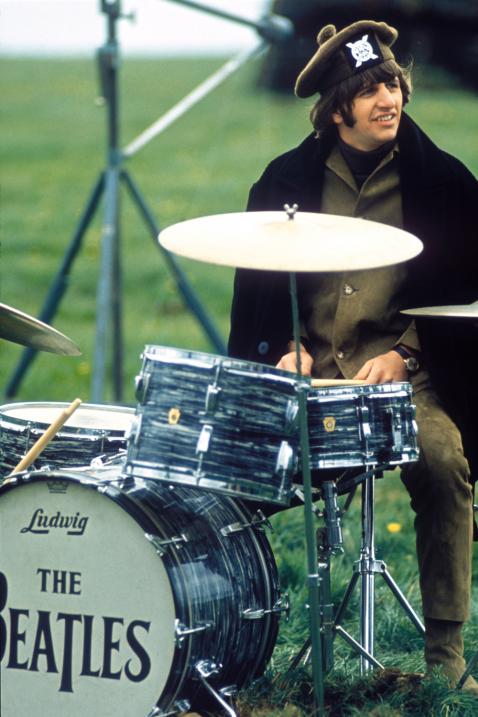
Ringo Starr's Very Cool Hat in "Help!" (Actually, a Scottish Military Issue Tam O'Shanter)

Since my band is preparing for a Beatles tribute in September, I have been looking for hats that say "Beatles!"  Don't take that literally, since there are baseball caps that have "Beatles" emblazoned on the crown.  What I want are hats like those the Beatles wore in their heyday in the 1960's.

John Lennon liked hats that are eight-panel newsboy caps, with the brim unbuttoned from the crown.  George sometimes wore a top hat, as he did in "Help!".  However, the coolest hat in that 1965 film was worn by Ringo.  It was a khaki colored, military issue tam o'shanter.  It is described in a bagpipe forum this way:
If you watch the Beatles 1965 film "Help!", there is a musical sequence on Salisbury Plain near Stonehenge with the Beatles being guarded by British soldiers -- I think one of the Scottish regiments, based on what I've seen from stills shot at the time. In the movie, Ringo wears a khaki tam o'shanter obviously borrowed from a soldier and I've tried to ID the regiment from what you can see of the tartan backing and cap badge -- can anyone else hazard a guess? I think possibly the KOSB or RS (is that Hunting Stewart or Leslie?). The cap badge is *I think* the unpopular and short-lived "Lowland Brigade" badge issued for a time to all the units grouped in the brigade (there was at the same time a common "Highland Brigade" badge).
52nd Lowland Cap Badge Design
52 Lowland Cap Badge
Tartran Backing
I've done some research, and the tam o'shanter (a Scottish cap) was of the 52nd Lowland Brigade (as proved by the cap badge of same).  The big X is actually the St. Andrews Cross, a Scottish symbol.  It is also a part of the flag of Scotland, a white cross on a blue field.

At first I thought the cap badge backing (the square piece of cloth beneath the cap badge) was solid black, or what they call Government Tartran.  I have changed my mind.  The badge backing, after blowing up a picture of Ringo (see above), appears to be the Tayforth Universities Officers Training Corps Hunting Stewart Tartran.

52 Lowland Cap Badge & Backing
(Photoshop Simulation)
So where could a Beatles fan/musician get a hat like Ringo's?  You can order military issue tam o'shanters here (for $35) or here.  Some of these hats are more of a green tint, but Ringo's was obviously of a tan or light brown color.  Therefore, I would opt for the second link above.

You can buy a 52nd Lowland badge off of Ebay, when they are available.

 You can order the cap badge backing here -- see item E1J995.

You will have to have the badge backing sewed onto the tam o'shanter, then affix the 52nd Lowland badge over that.  Finally, you will have a hat identical to that Ringo wore in "Help!"  Final cost will be in the neighborhood of $100.

Finally, here's a video showing the Beatles (and Ringo in his hat) playing "I Need You" in the movie "Help!".  You also get a good view of John's unbuttoned, green corduroy newsboy hat.

Note:  the Video was removed by the owner due to copyright.  Asinine, no doubt it was Fair Use because it was instructional in nature and not for profit, but hey, big corporations can be asswipes.

UPDATE:  I ordered all the components as described above, and put them together.  I sewed on the tartran backing myself, then carefully punched small holes through the tartran and the hat in order to afix the cap badge.  Fortunately, I did not ruin the hat in the process.  The badge is held on by a cotter pin inside the cap.  Here is the result:  a Scottish military tam o'shanter that is very close to the one worn by Ringo in the film "Help!":
My recreation of Ringo's hat
Note that I am wearing the tam with the cap badge between my left eye and my left ear, which is the proper way to wear it.  Ringo wore his borrowed tam with the cap badge in the middle of his forehead.  It looks nice, but is not the proper military way to wear the cap.

Saturday, July 27, 2013

Hats for Musicians: If you ain't got the right hat, you can't be in the band. It's in the Musician Union rules.

If you're going to be in a band, you gotta have the right hat.  I am, of course, referring to most any kind of band, whether it be classic rock, British rock, Reggae, Blues, Funk, Latin, Country, Jazz or Peruvian Flute.

Stingy-Brim Fedora
Possibly the most popular hat worn by band members today is the stingy-brim fedora.  These are great looking hats.

Another popular band hat is the pork pie hat.  These have long been popular with jazz bands, but have moved into rock and roll as well.
Pork Pie Hat

Recently, I purchased a Homburg hat because I saw the steel guitar player in Hank Williams III's band with one.  I liked the look.

You can find a lot of hats on EBay.com, or just google them by name and you will find many suppliers.  Look for the best prices.

Stacy Adams Homburg Hat
My band is scheduled to play for a Beatles tribute in September, so I ordered a "John Lennon" hat off of Ebay -- see picture.  Finding retro British-style rock hats isn't easy all these years after the British Invasion of the 1960's.  John Lennon's favorite hat was a retro newsboy hat, also called a Baker Boy's hat or Applejack or Eight Panel hat.  These often resemble a Greek fisherman's hat.

John Lennon Style Hat
The best representation of the Lennon hat that I found is made in Poland, and it will be at least three weeks before it arrives.  There are suppliers in Great Britain who also make similar hats.  They are made of corduroy.

There are many kinds of hats for musicians to choose from, and the proper hat creates a favorable impression to the audience.  Use your imagination and find the topper that fits your fancy.

Monday, June 24, 2013

Let's Get Funky! (Uh...But What Is Funk Anyway?)

Musicians who play with soul often use a technique called "funk."  But what is funk?  According to About.com:
Funk is a very distinct style of music based on R&B that reached its height in popularity from the late 1960s to late 1970s. Its name originated in the 1950s, when "funk" and "funky" were used increasingly as adjectives in the context of soul music -- the meaning being transformed from the original one of a pungent odor to a re-defined meaning of a strong, distinctive groove [the "groove" being the rhythm laid down by the drums and bass].

One of the most distinctive features of funk music is the role played by bass guitar. Before soul music, bass was rarely prominent in popular music. Players like the legendary Motown bassist James Jamerson brought bass to the forefront, and Funk built on that foundation, with melodic basslines often being the centerpiece of songs. Other noteworthy funk bassists include Bootsy Collins and Larry Graham of Sly & the Family Stone. Graham is often credited with inventing the percussive "slap bass technique," which was further developed by later bassists and became a distictive element of funk.

The stong bassline is primarily what separates Funk from R&B, soul and other forms of music, melodic basslines often being the centerpiece of songs. Also, compared to the soul music of 1960s, funk typically uses more complex rhythms, while song structures are usually simpler. Often, the structure of a funk song consists of just one or two riffs. The soul dance music of its day, the basic idea of funk was to create as intense a groove as possible [emphasis added].

The Funk genre has lost most of its popularity since the 1970s, but saw a mini-revival in the early 1990s due to the sampling of Funk songs by hip-hop artists.

Examples of popular contemporary funk artists include Soulive and funk pioneer George Clinton, who's still recording new music after more than three decades. Also, many rock bands use a stong funk element in their music, including Primus and the Red Hot Chili Peppers.
My major problem with this piece is its definition of funk as a separate genre of music.  Funk was and is a style or technique, not a different genre.  It was mostly applied to Rhythm and Blues or Soul music, but may be applied to other genres as well.  Elements of it can be found in any face-paced music genre, like Latin (think Santana) And jazz.  Vince Guaraldi, the famous jazz pianist, was known as "Dr. Funk" to his fans and fellow musicians.

Funk is a staccato bassline with triplets and eighth notes, many of which are played on the upbeat.  That's why it is so hard to play -- our natural tendency as bass players is to play on the downbeat.  In addition to playing in a staccato style, the bassist also relies on slap and pop techniques to emphasize certain chords, and hand muting techniques to make individual notes more distinct.  Beyond all this technical verbiage, funk just sounds good!  An otherwise bland song can be given pep, the way a bland soup wakes up to spices.

EXAMPLES OF FUNK
A great example of a song played "funky" is the classic R&B tune "I Heard It Through the Grapevine."  Marvin Gaye's 1968 version is the most popular, though it wasn't funky when first released.  Gaye added funk to later live renditions, as we shall see.  Here are some facts about this famous song:
The Gaye recording has since become acclaimed a soul classic, and in 2004, it was placed on the Rolling Stone list of The 500 Greatest Songs of All Time. On the commemorative 50th Anniversary of the Billboard Hot 100 issue of Billboard magazine in June 2008, Marvin Gaye's "Grapevine" was ranked 65th. It was also inducted to the Grammy Hall of Fame for "historical, artistic and significant" value.
Now let's consider different Versions of "Grapevine," funky and the not-so-funky:

1. Gladys Knight and the Pips released their version in 1967, before that of Marvin Gaye, and it went to number two on Billboard.  Gladys Knight's version is undoubtedly the funkiest version.  See her sing it live at this link, and be sure you can hear the bass (use headphones if you don't have capable speakers).

2. Marvin Gaye's original version was not funky but he added funk in later performances.  Hear his original 1968 recording here (no funk) and his live performance in Montreux here (funk added).

3.  Finally, there is Creedence Clearwater's version of the song -- no funk at all.  Hear it here.

In my opinion, the funk adds a great deal of color, class and enjoyment to the song.  Funk may not be absolutely necessary, but it surely separates the elite performers from the also-rans.  Therefore, if you are a bass player, it would behoove you to learn at least some basic elements of funk style.

MORE EXAMPLES:
ONLINE LESSONS ON FUNK
There's a series of lessons on YouTube called "Rock School," produced by mostly British performers, explaining various aspects of rock music.  Volume 3 of Rock School covers "Funk."  There are eight videos covering in Vol 3, but only the first three deal with funk.  They are worth your time if you want to get funky.  See links below.


When learning to play funky, start slow and add more over time.  Be patient.  

Wednesday, June 19, 2013

Experienced Musicians Jam to "Born To Be Wild" (Video)

When experienced musicians come together to jam, the results can be pleasing. Here we are at a Jam party last week, playing "Born To Be Wild." This was the first time we had played this song together, and it already sounds polished, IMHO.


 Here we are accompanying a fair lady singer in the Monkees' classic "Daydream Believer." This one is probably not ready for prime time, but pleasant nevertheless.


Tuesday, June 4, 2013

Bro and Stogie Jam Out With "Black Magic Woman" (Video) -- Hear My New Jazz Bass!

Over the weekend I visited my older brother (Bro) in Fallon, Nevada. We jammed for two days straight! In a jam, you play many songs that you may not have played before. Bro and I haven't played music together for three and a half years, but had a great time and were pleased with the results. Because it's a jam, the renditions will not be as polished like they would be if previously rehearsed. That adds a bit of fun to the efforts, because improvization is required. In the vid below, Bro is playing a black Fender Stratocaster guitar, but you can't see it behind his keyboard. Too bad, it's a beautiful guitar -- but you can certainly hear it well. I am in the fedora playing my new Fender Jazz Bass. Have a listen.


Here's the guitar Bro is playing:

Black Fender Stratocaster

Thursday, May 30, 2013

Stevie Ray Vaughan: One of the All-Time Great Guitarists (Video)

Stevie Ray Vaughan was a self-taught guitarist from Texas who rose to fame and acclaim in the 1980's due to his innovative and energetic guitar solos.  He mainly played on a Fender Stratocaster, fitted out with the heaviest gauge strings available.  The strings were so heavy that he regularly tuned his guitar down a half step, to Eb.  His bass players did the same.

Vaughan was a good-looking guy who always wore cowboy hats, decorated with shiny bling or rhinestones or fancy bands.  In many ways his garb reminded me of Hank Williams (Sr).  Even his guitar strap was decorated with large musical notes, like those Hank Williams often wore.  During the evening of August 27, 1990, SRV had just performed at the Alpine Valley Resort in East Troy, Wisconsin and was ready to board a helicopter for a ride back to Chicago.  Four helicopters departed in a thick fog, one every two minutes; Vaughan got the last seat available in one helicopter, asking his wife and brother to take the next one as he was anxious to get back to Chicago.  Vaughan's copter never made it, as it flew into the side of a mountain shortly after taking off, killing everyone on board.  Stevie Ray Vaughan is buried in Dallas. (Read more about it here.)

It seems that if you desire a quick death, become a famous musical performer and take a ride in light aircraft.   Stevie joined many others who went that way before him, Patsy Cline, Otis Redding, Buddy Holly, The Big Bopper, Ritchie Valens, Jim Reeves, Ricky Nelson and others.

In any case, here's a video of Stevie Ray Vaughan, made in 1984.  It's a comical piece featuring his hit song "Cold Shot."


Serious Jamming Ahead! Off to Nevada to See Bro!

Tomorrow I am driving to a town near Reno, Nevada to see my older brother, "Bro."  It will be a welcome interruption to my daily rut.  Bro is an accomplished musician and plays lead guitar, steel guitar and keys.  He teaches guitar and gigs around the locale where he lives.  We will do some serious jamming, and yes, I am bringing my new bass guitar.

Right now I am sitting in my lovely backyard gazebo, enjoying the very mild California weather, and listening to a CD of Anat Cohen (jazz clarinet) that my friend Rick Darby (of Reflecting Light) sent me.   (Thanks Rick!)

The problem with reaching retirement age is that every significant goal in life has been achieved:  you completed your education, got your degree, started a career, found a mate, had children and grandchildren and finally retired.  Now you get to do nothing all day!  Just hang around and wait for the grim reaper.

Doing nothing is absolutely boring.  Without a major purpose in life, one can lose his zest for life, even his will to live.  So to increase my sense of purpose, I have turned to my long-deferred goal of becoming an excellent bass player.

For the past three weeks I have been studying music and practicing bass for anywhere from 3 to 5 hours a day.  I am not just practicing what I already know, but pushing myself to gain new skills, to break through to the next level.  My practice involves practicing jazz chord progressions to backing tracks, watching how-to videos (Scott Devine's are best), practicing speed and accuracy drills, playing to music and recording it for analysis, among other things.  Because so many riffs and bass lines are presented as written music (with notes and time and key signatures), I can see that I will have to renew my study of reading music, too.   And that's fine!  I want to be a real musician, one who is literate and can sight read.

From time to time I will post recordings of my progress.

Sunday, May 26, 2013

Chords in the Major Scales

Yesterday I purchased the five study packages from Scott's Bass Lessons and learned some new things.  One of the most important is that the chords in each major key always follow the same pattern.  Knowing this, you can figure out the chords in any major key you play.  You take the seven notes of the major scale and play a major chord for the 1st, a minor chord for the 2nd and 3rd, a major chord for both the 4th and the fifth, a minor chord for the sixth, and a diminished chord for the 7th.  

See the chart below.  The major scale for the Key of C is C, D, E, F, G, A, B.  SO, the chords for the key of C are C, Dm, Em, F, G, Am and B diminished.  The chart shows all chords in each major key.  The chart can be a useful reference when playing jazz or blues chord progressions.  For example, if someone tells you that the progression is a ii-V-I progression in Bb, you would know the chords referred to are Cm, F and Bb.


To better understand how chords relate to scales, see this discussion at musictheorysite.com.

Thursday, May 23, 2013

Playing My New Fender Jazz Bass to "Cold Shot" With My Band

My New Fender Jazz Bass
Here's me playing my new Jazz Bass with the band. Unless you have quality computer speakers or headphones, you won't be able to hear the bass!


Monday, May 20, 2013

The New Fender Jazz Bass - Made in China. I Want One!

My first bass was a brand new, 1960 Fender Jazz Bass.  My father bought it for me when I was 15 years old.  Since I was too lazy to learn guitar, he figured (mistakenly) that bass would be easier to play.  So, thanks to my father, I, the family musical slacker, was assigned the role of bass player.

My Jazz Bass came with a nickel chrome tail piece with a big "F" on it, and also a chrome cover for the forward pickup.  These accouterments were supposed to improve the looks of the bass, but for modern bass players, they are more of a deterrence than anything else.  So Fender did away with them, and I agree with the decision.

During the late 1960s, British rock was all the rage, and groups did not use Fenders as much -- so I sold mine (big mistake).  In 2005 I bought a Fender Mustang bass, thinking the shorter neck would be good for my small hands.  That was also an illusion.  Even small hands can be trained to successfully navigate a standard bass guitar neck, and I have no problem with the full-sized neck on my Rickenbacker 4003.

With my growing interest in becoming a professional bass player, I have developed a desire to have another Fender Jazz Bass.  For sentimental reasons, I want one that is three-color Sunburst and has a tortoise shell pick guard -- like the one my father bought for me in the long-ago summer of 1960.  With the advent of the Chinese made version of the bass, the price for a Jazz Bass has become very affordable.  The Chinese version above costs $499, compared to $1,350 for the American-made version on the right.

Yesterday I went to Guitar Center in Gilroy and played a Chinese Jazz Bass.  The finish on it was gorgeous, and the neck and action sublime.  It sounded great as well, even with the cheap Chinese strings that come with it (I will upgrade to better strings if I buy one).  The pick guard is black, but I can buy a tortoise shell pick guard from Sweetwater for less than $30.  I can also order a beige, tweed hard shell case (like the one that came with my 1960 bass) for about $130.  The Chinese bass only comes with a gig bag.

Other differences are (1) the wood -- the Chinese bass is made from alder whereas the American version is made from ash.  (2) The Chinese version has noise-canceling humbucking pickups, compared to the traditional single-coil pickups on the American bass.  Fender describes the new bass this way:
The Modern Player Jazz Bass® is a volcanic new take on the time-honored Jazz Bass thanks to its dual Modern Player humbucking Jazz Bass pickups. Other features include an alder body, C-shaped maple neck, rosewood fretboard with 9.5" radius and 20 jumbo frets, three-ply pickguard, vintage-style four-saddle bridge with brass saddles, open-gear tuners and nickel/chrome hardware. Available in Three-color Sunburst, Olympic White and Black Transparent.
Reviews of the new bass on YouTube and on bass forums are very positive.  This appears to be a great bass at a great price.  I'm going to get one -- hopefully, sooner rather than later.

UPDATE 5/22/2013 -- The bass is mine!  I bought it today and I love it!!